Curaçao Food: Traditional Dishes You Have to Try

Curaçao’s food reflects its history: a blend of African, Dutch, Spanish, Latin American and Caribbean influences. You’ll find slow-cooked stews, cornmeal dishes, super-fresh fish, fried pastries… and even stuffed Dutch cheese!

Here are Curaçao’s traditional dishes to try during your trip, and where to find them.

The must-try dishes

Keshi yena: the island’s signature dish. Originally, a hollowed-out cheese rind (Edam or Gouda) filled with spiced meat, usually chicken, plus olives, capers, raisins and vegetables, then baked. These days it’s often made in a ramekin, but the idea is the same.

Stoba: a slow-cooked stew made with beef, chicken or, more traditionally, goat (stoba di kabritu). It’s served with rice, funchi or plantains.

Funchi: the backbone of local cooking – a kind of cornmeal polenta, served in slices or balls, sometimes pan-fried. It’s called tutu when mixed with beans (often served with fish).

Street food

Pastechi: THE Curaçao snack – a fried pastry filled with cheese, chicken, beef or tuna. Perfect for breakfast or a quick bite, for just a few guilders.

Johnny cake: a small, slightly sweet fried bread, often filled with cheese or tuna.

Truki pan: in the evening, food trucks (“truki pan”) serve up generous plates of meat, skewers and fries. A very local experience.

Soups and seafood

Fresh grilled fish: wahoo, mahi-mahi, snapper… On an island, it’s a must. It’s often served with funchi or tutu and a Creole sauce.

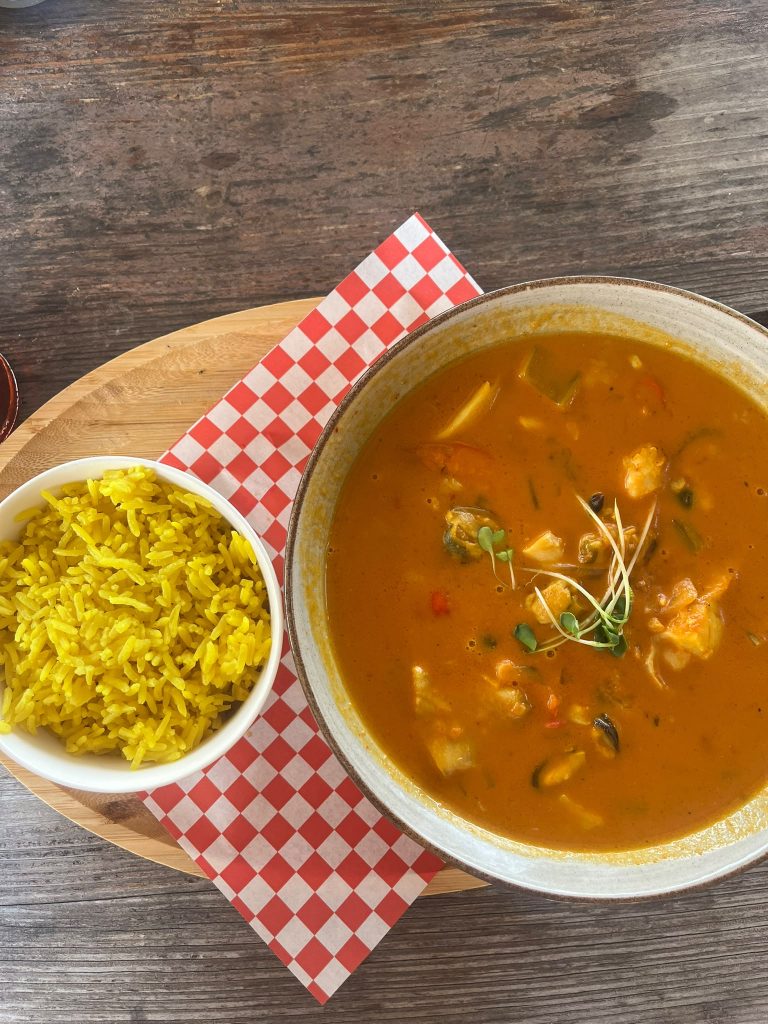
Sòpi di piská: a fragrant fish soup – comforting, even in the heat.

Sòpi di kadushi: the most surprising of all – a soup made from columnar cactus, with a slightly slimy texture. A true local specialty worth trying at least once!

Sòpi di yuana: iguana soup, a traditional dish still served at a few local spots, especially in the west of the island.

🐟 For seafood lovers, our friends at The Little Green Boat have picked their favorite seafood restaurants in Curaçao, with tips on choosing sustainable species.

Sweets and drinks

Bolo pretu: “black cake” made with candied fruit and rum, served at celebrations and weddings.

Kokada: bite-sized coconut sweets.

Curaçao liqueur: you can’t leave without tasting the liqueur named after the island, made from the dried peel of the laraha, a local bitter orange. You can visit the historic distillery at Landhuis Chobolobo.

Awa di lamunchi: homemade lemonade, perfect for cooling down.

Where to eat local food in Curaçao

  • Marshe Bieuw (the old market) in Punda: a large hall where you lunch at communal tables on home-style dishes (stoba, funchi, fish, soups). Go at lunchtime – it’s the most authentic place to discover Creole cooking.
  • “Snèk” snack bars: these small neighborhood spots serve pastechi, johnny cakes and daily specials at friendly prices.
  • Truki pan in the evening, for a hearty local meal.
  • Restaurants in Pietermaai and Jan Thiel: more touristy, and often putting a modern twist on local cuisine.

👉 Also worth reading: Curaçao’s markets and things to do in Curaçao.

JOIN THE ADVENTURE

Sign up to get
our best tips and deals!