
With its pastel facades lined up along the waterfront, Willemstad is surely one of the most photogenic cities in the Caribbean. In fact, its historic center and harbor have been a UNESCO World Heritage Site since 1997.
The good news is that you can see it all on foot. Here’s what not to miss, neighborhood by neighborhood, with our tips for enjoying it without melting in the sun.
The city is split in two by St. Anna Bay, the channel leading to the island’s large natural harbor:
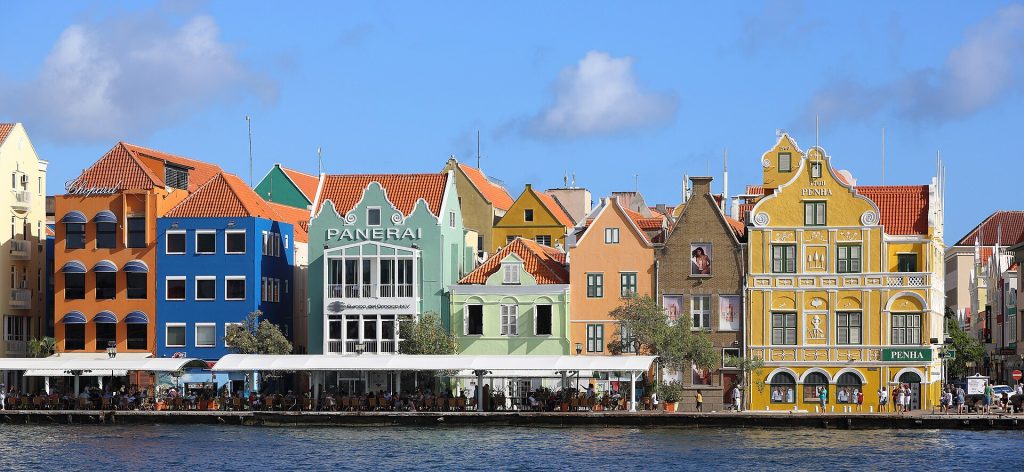
This is Curaçao’s signature shot: a row of Dutch colonial-style houses in yellow, blue, pink and green, facing the channel. Legend has it that a 19th-century governor, plagued by migraines from the sun glaring off the white facades, ordered them painted in color. True or not, it’s a fun story!
💡 The best view is from Otrobanda, across the water.
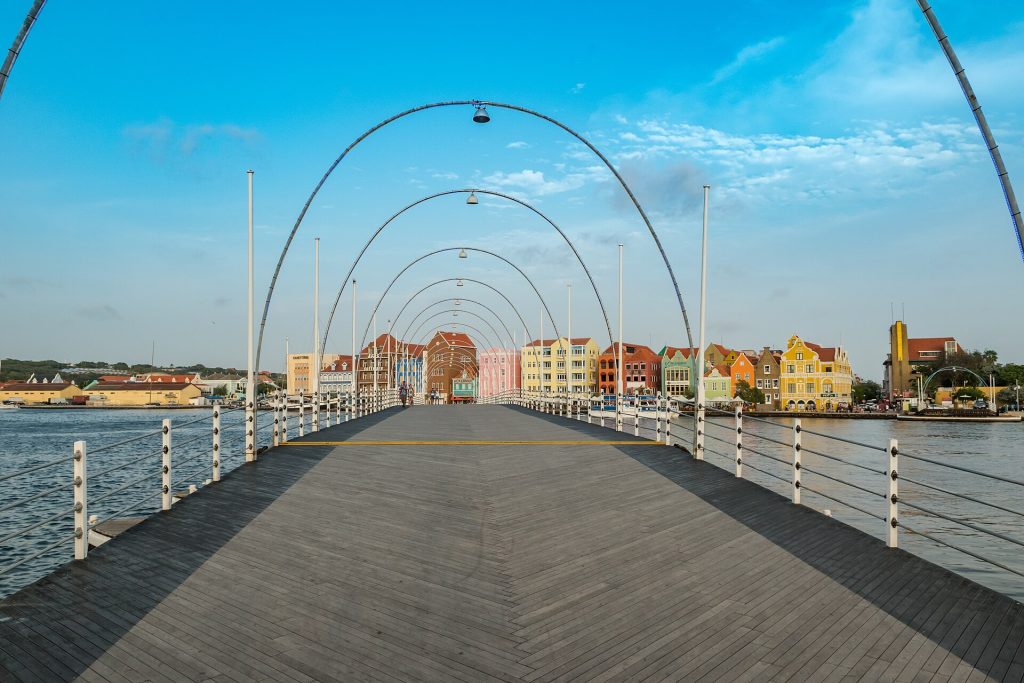
This floating pedestrian bridge, resting on pontoons, links Punda and Otrobanda. What makes it unique? It swings open to let ships into the harbor. When it’s open, small free ferries shuttle people across. At night, it lights up.
In the distance, you’ll also spot the towering Queen Juliana Bridge, which spans the bay high above the water so cargo ships can pass underneath.
Just behind the Handelskade, Fort Amsterdam now houses the seat of government; you can walk into the courtyard and see its church. A few streets away, the Mikvé Israel-Emanuel Synagogue is considered the oldest synagogue in continuous use in the Americas. Its floor is covered in sand – a tradition with several possible interpretations. You can visit it along with a small museum (entrance fee).
Punda also means pedestrian streets, shops and plenty of murals.
Across the bridge, Otrobanda feels more authentic: narrow alleys, restored houses and street art murals. Rif Fort, an old fortress turned into a hub of restaurants and shops, offers a lovely view over the harbor entrance, especially at sunset.
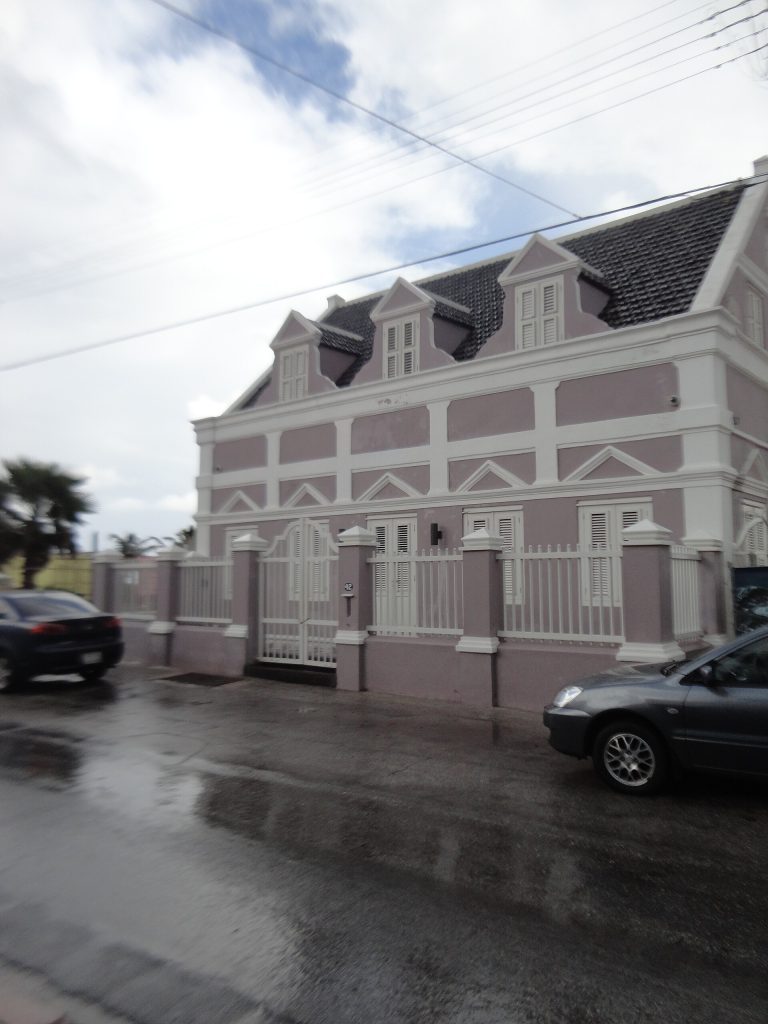
East of Punda, Pietermaai is the place to go out at night: beautifully restored merchants’ mansions, restaurants, bars and charming boutique hotels. Right next door, Scharloo mixes grand mansions with buildings still awaiting renovation, plus some stunning street art.
To really understand the city’s story (trade, slavery, the Jewish community, the Dutch and Latin American influences), nothing beats a guide. Our friends at Gone Caribe offer a private walking tour of the city center lasting about 2 hours.
👉 Also worth reading: things to do in Curaçao and where to stay in Curaçao.
We and our partners process some of your non-sensitive personal data using cookies to show you personalized content, measure traffic to our site and make your visit more enjoyable. Only with your consent, of course. Your choice is saved for 6 months and you can change it at any time via our legal notice.